

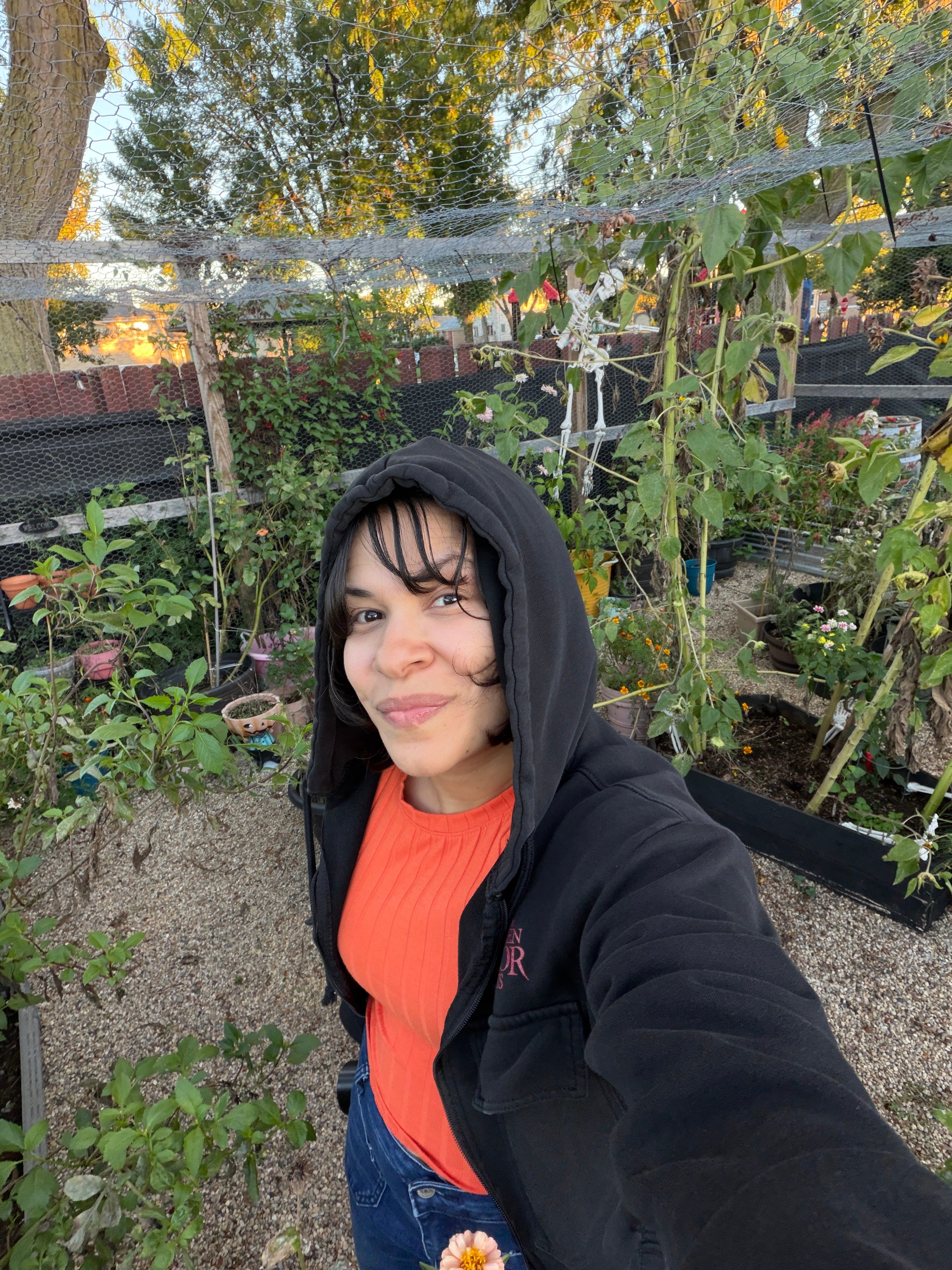
My garden has officially started its transition into the next phase…death.
The once lush petals of the few dahlias still blooming have begun to wither and drop away as an acorn-like pod shines at the center. The paper-like zinnia petals are slowly turning a soft, dusty brown with sparkles of color remaining. The black-eyed Susan’s vibrant golden petals have begun curling in and dropping, leaving a dark brown cone at the center. The snapdragons stubbornly stay a lush green until the very harsh and brittle cold comes, only producing blooms sparingly.
A dying garden can look sad and messy to some, but to me it is beautiful. I even bring some of it into the house and have kept at least one bunch of dried zinnias for decorations over the past few years.


To be honest, this past month I really didn’t spend too much time in the garden at all. Any water it got was from Mother Nature herself. And while yes, the garden is dying, there is still so much life in it. There are several plants, like marigolds and even a few zinnias, still producing blooms. Most are rushing to produce seed and send their babies out into the world before Mr. Grim Reaper (cold weather) comes through.
No two gardening seasons have ever been the same. At the end of every year, I like to reflect on the things that went wrong and right.
A hard lesson I learned this year is patience. I tend to start my seeds indoors with the hope that we’ll get an early last frost date. The sooner I can get the plants outside, the sooner I get blooms.
Well, this year that bit me in the ass with dahlias. I transplanted them outside way too early, and we got hit with a late frost. It killed a few plants and definitely stunted the rest, causing them to be weak and more susceptible to disease. They were some of the first plants to get infected with powdery mildew. I’ve struggled with dahlias in general, so I’m not sure if I’ll plant them next year. But if I do, I’ll make sure to wait until mid to late May to bring them outdoors.
Planting a garden in general is all about patience. I start seeds in early March and have to wait months before getting blooms. I have to show up every day to nurture the plants without any assurance they’ll even make it to a bloom.
When it comes to the garden, I understand the process, but sometimes in life I still lack patience. I tend to underestimate the time it’ll take to complete something, the biggest one being writing a book. I can put so much pressure on myself to perform, hoping I’ll get to the finish line quickly. But I’m learning that I have to trust the process, and sometimes things just take time. That doesn’t mean they aren’t worth it. Some things are worth taking your time with.


Another hard lesson is that you have to show up even when things get uncomfortable, especially when they’re uncomfortable and hard. Like tending to the garden and watering sometimes twice a day during the extremely hot summer days. Or consistently weeding and addressing any disease issues immediately.
The last one is where I struggled this year. Because I failed to show up consistently, the powdery mildew ended up spreading throughout the garden, affecting plants that I’ve never seen affected before. This lack of consistency spilled into my writing as well this year. A lot of factors contributed to that, but I know that I struggled, and it’s been even harder to reestablish a consistent writing routine.
When we get ideas and start thinking about new goals, the beginning is always so exciting. We’re motivated and full of hope. But a lot of the time, once we reach that messy middle or something difficult, (like editing a book for the first time) shows up, we freeze. We slowly start showing up less and less, afraid to sit in the discomfort and do the hard work. But showing up even when it’s hard is the only way to get to the other side.


Less is more is something I somehow forget every year. And while I have downsized a bit on all the plants I grow, I’m still weak to the excitement of a new gardening season. That has led to the familiar August burnout.
See, one plant with ample room around it will grow bigger and produce more blooms than several plants crowded together fighting for nutrients. And when one gets infected, the plants surrounding it are more likely to get infected too because there’s no airflow.
Maybe I’m not that different. I have a habit of filling my life with goals and things I want to accomplish, only to overwhelm myself and wonder why I’m burnt out. I accomplish something and almost immediately start thinking about what I need to do next instead of taking a moment to enjoy what I just did.
I’m learning that maybe I don’t need to do everything. Maybe if I focus on one or two things, and I mean really focus on them, I can give them the room they need to actually grow.


Another realization I had this year is that the garden is less about me. I cut substantially fewer flowers this year to bring into the house. Instead, I purposely left them outside for the bees, butterflies, and birds. It’s funny because I wanted an enclosed garden to keep wildlife out, specifically the squirrels, but now I’m realizing that the garden is for the wildlife. And maybe they need it more than I do. I’m even considering taking down some of the chicken wire, but I’ll take the winter to think more about it.
Every month of gardening is a different part of the cycle, and all of it is important. Even the death of the plants as they go to seed, enrich the soil, and become food and shelter for bugs and birds.


Our lives seem to move through similar stages. There are seasons full of excitement and growth, like planting a tiny seed and watching it sprout its first set of leaves, then grow into a big, beautiful plant full of colorful blooms. Everything feels great. It’s all sunshine and rainbows.
Then there are seasons where BAM, something knocks you down, aka powdery mildew. And sometimes that one thing starts spreading into other areas of your life until everything feels covered in a muted gloom. We revert to old habits. We stop doing the things that make us feel like ourselves. Before we know it, we feel stuck or completely lost.
I don’t know if we necessarily need those seasons, but they are inevitable. And maybe what matters is what we do with them. Sometimes being stuck forces us to slow down long enough to realize what isn’t working anymore and outgrown. What we need to let go of before we can make room for something new.
The garden doesn’t fight the end of its season. It lets the flowers fade. It drops its seeds The dying plants return nutrients to the soil. It rests. What looks like an ending is just the quiet preparation for whatever comes next.
Maybe that’s what I’m learning too. Not every season of life is going to be full of blooms. Sometimes things have to change. Sometimes we have to let things go. Sometimes we just need to rest, reflect, and figure out what is worth carrying with us into the next season.
And when the time is right, we grow again.
Until next time,
Christina
One Last thing….
Here is a montage of the magic of the garden throughout the entire year. I have really enjoyed recapping each month and sharing it with all of you. This will be the last Garden Diary post for the year as I shift my focus back to my book and monthly newsletters. I’m trying to take my own “less is more” advice for the remainder of the year. Haha. Don’t worry, I fully intend on bringing this series back next spring. Thanks again for reading along and spending another gardening season with me. I hope you enjoy one last look at the garden.
BEAUTIFUL!