

She woke up with a dull ache behind her eyes, the familiar weight of exhaustion already settling in. It was Monday morning in February, and the alarm’s piercing sound didn’t wake her so much as it reminded her of everything that awaited her. The list in her head started before her feet even touched the floor: Make the hubby’s lunch, iron his clothes, get the kids up and ready for school, schedule that doctor’s appointment... Shit, did I take out the chicken from the freezer for dinner last night? Don’t forget about the meeting at work. Did I pay the electrical bill?
She sighed, her head heavy with the weight of it all. Quietly, she moved so as not to wake him and made her way to the bathroom. As she brushed her teeth, she saw her reflection and barely recognized herself. Messy hair, dark circles under her eyes. She headed to the kitchen to prep lunches for everyone. Realizing she didn’t have enough bread for the kids, she briefly felt frustrated, but quickly set aside her needs, settling for yogurt instead. It was easier this way.
She woke up the kids, hurrying them to the table for breakfast. Exhausted, she opted for cereal. She felt guilty, but there just wasn’t enough time for anything more. As the kids ate, she ironed her husband’s work clothes and made his smoothie. The noise of the morning chaos filled the house until her husband appeared, grabbed his clothes, dressed, and sat down for his breakfast smoothie and coffee. A few sips later, he grabbed his lunch, kissed her, hugged the kids and left for work.
She barely had time to breathe before she had to rush the kids to finish getting ready. The clock was ticking. She had exactly 13 minutes to get herself ready before the school bus arrived. With two minutes to spare, she got the kids out the door.
At work, she went through the motions, emails to send, calls to make, deadlines to meet. She hated the job, but finding another one wasn’t an option. Not with bills to pay and responsibilities to meet. She powered through the day on autopilot, dreading the evening before it even began.
Picking up the kids was just another part of the routine. She toggled between helping with homework and cooking dinner, trying to clean the house in between tasks. Her husband came home, grabbed a beer, and plopped into his gaming chair, starting up his video game. He glanced around and complained about the mess, then asked what was for dinner, like it was solely her responsibility, without him lifting a finger. She served everyone, then finally sat down to eat.
Her son, already finished, asked for seconds. Without hesitation, she got up to get them for him. By the time she sat down again, her dinner was cold. She ate it anyway.
After dinner, she got the kids into the shower and ready for bed. Her husband went back to the video game. The house was still messy. The laundry still waiting. She was still tired. She tucked the kids in, and at last, it was time for bed.
Her body sank into the mattress, but her mind wouldn’t stop. She laid there, scrolling through her phone. Posts about working out, feeling good about themselves. She wanted that, but there was no time. There never was. The thought never made it past the surface. Then, another post about someone landing their dream job, and for a fleeting moment, she imagined what it might feel like to have something just for her, something she was passionate about.
But that thought disappeared as quickly as it came. Dreams? She hadn’t had room for those in years. All she had was this routine. This never-ending cycle. It was enough, right? Her mother lived this life and was happy… wasn’t she?
She turned off her phone and closed her eyes. The questions lingered. Tomorrow would be the same. It always was. It wasn’t that she minded taking care of her family. She loved them. But sometimes, just sometimes, she wondered: What happens to her? What happens to the women in abusive relationships? What happens to the single moms? What happens to all the women who were never taught to put themselves first, who were never told they were worthy of their dreams and ambitions?

We all know at least one woman who lives this life; the endless cycle of self-sacrifice, exhaustion, and the invisible labor that goes unnoticed. It’s 2025, and yet, we’re still living by the patriarchal system's terms, where women's needs, dreams, and well-being are often placed on the back burner. But that’s how some men (not all) feel safe, isn’t it? Why are men so afraid of a woman who stands in her power and knows her strength? Why do they fight so hard to maintain control and resist change? Because if all women realized their power, I truly believe we could, and would, create change and dismantle the patriarchy for good.
But what does it truly mean to live in a patriarchal society? It means existing in a social system where men hold the majority of power and privilege. This structure oppresses and subordinates women, reinforcing the idea that men are superior and should hold authority over them. It enforces rigid gender roles, where women are expected to take on domestic duties while men assume leadership positions. And what’s the impact on women? It manifests in the form of systemic discrimination—pay gaps, limited access to leadership roles, and widespread gender-based violence.
We’ve been raised within this system, and many women, especially in the United States, have been conditioned to believe it’s simply part of being a woman. I grew up witnessing the women around me endure mistreatment from their spouses and vowed never to let that become my reality. I am grateful and feel incredibly lucky to have found a partner who views me as an equal. But for most women, equality in their relationships is still not a reality.
How are we still here, fighting for equality? Many women have come before us, fighting for this cause and making significant strides. One such woman was Mary Wollstonecraft, whose revolutionary work A Vindication of the Rights of Woman (1792) challenged the societal norms of her time. In her work she believed that women are not naturally inferior to men but are instead are socially conditioned to appear so due to lack of education. She believed that women, if educated properly, would be able to contribute to society in meaningful ways beyond just being wives and mothers. Her ideas helped lay the foundation for modern feminist thought.
Then there's her daughter, Mary Shelley, who not only wrote the iconic Frankenstein (1818) book but also pushed the boundaries of creativity. When Frankenstein was first published, it was released anonymously because women’s work was not taken seriously in the 19th century. Mary was also concerned that, since she was married to the well-known poet Percy Bysshe Shelley, her work would be dismissed as the product of her husband’s influence rather than her own intelligence and creativity. In addition, the gendered expectations of women writers restricted them to certain genres or themes, like romance or domestic novels. A book like Frankenstein would have been considered highly unconventional for a woman. It took 13 years for Mary Shelley to be fully recognized as the author of Frankenstein.
I recently watched Mary Shelley (2017), a film that beautifully captures her struggles and creative journey. It’s an inspiring watch for anyone interested in her impact on literature.
While the women of history laid the groundwork for change, today’s women continue to break barriers and inspire us with their strength, resilience, and determination, helping one woman at a time find her strength and realize her power. There are several women whose stories have deeply inspired me and shaped my own journey, and I want to honor them by sharing how they’ve impacted my life.
One of the women who has greatly influenced my journey is Rachel Hollis, an author and motivational speaker who entered my life around September 2018. Her unapologetic approach to following dreams, being authentically yourself, and breaking societal norms has had a huge impact on me. Through her books, podcasts, and messages about owning my story and not letting others define my success, I found the courage to take ownership of my own path.
Like most millennials, I was taught that happiness and success meant getting a college education, landing a good-paying job, climbing the corporate ladder, getting married, and starting a family. So when I accomplished all of these milestones but still felt unfulfilled, her book Girl, Wash Your Face became the green light I needed to fight for myself and my dreams. It taught me to take control of my own narrative, stop playing small, and stand in my power. I took a chance on myself for the first time ever and decided to live life on my own terms, outside of societal norms, thanks to the valuable lessons Rachel Hollis taught me.
Her second book, Girl, Stop Apologizing, also played a key role in my growth as a business owner and former people pleaser. Even after taking that leap, I still faced doubt and guilt. But Rachel's message helped me learn to embrace my ambitions, take ownership of my goals, and step into my full potential without fear of judgment or guilt. It challenged the societal expectation that women should be modest, self-sacrificing, or defer to others, urging us instead to unapologetically chase our dreams and live life on our own terms.
Rachel went on to write a couple more books, all sharing the same underlying message: While women have made significant progress, there is still work to be done in embracing and celebrating women’s voices, dreams, and power without apology. We must continue to fight not only for ourselves but for all women.
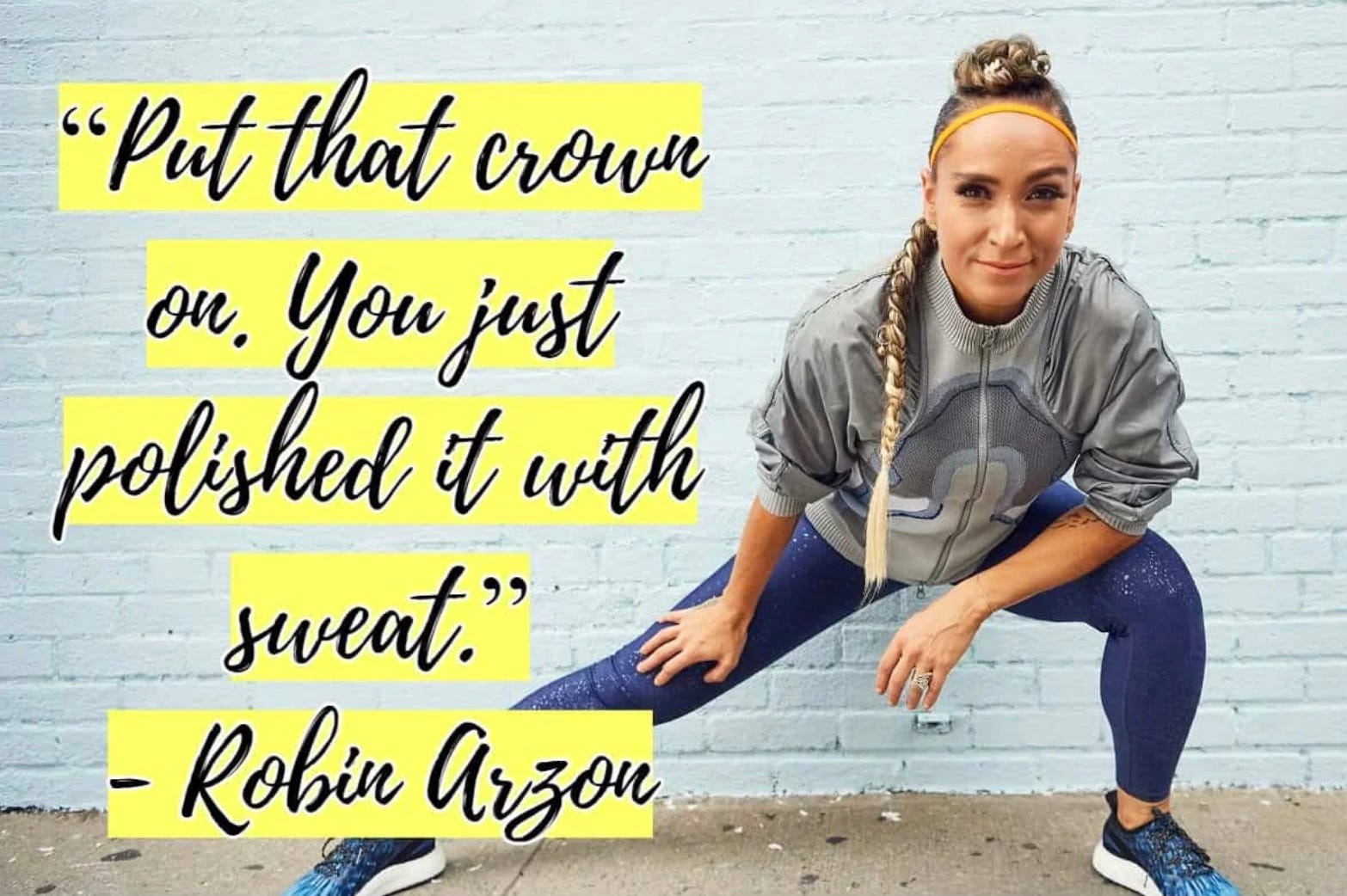
And then there’s Robin Arzon, a former lawyer turned fitness instructor and now Vice President of Fitness Programming at Peloton. As a Puerto Rican woman, I saw in her not just representation, but a powerful reminder that we too can succeed. I first was introduced to Robin and Peloton because she was a guest on the Rachel Hollis podcast (episode 99). The episode discussed the significance of maintaining physical and mental health, and how fitness can be a powerful tool for personal growth.
Another message that resonated with me was the value of learning through action, even when you don’t feel prepared. It felt like a sign from the universe, urging me to start prioritizing my physical health. When I heard that podcast episode, it was a few months into the pandemic, and my mental and physical health were deteriorating. I was drinking and eating a lot of junk food, trying to juggle being a business owner, mother, wife, and teacher of a kindergartner, since schools were online. It was a very stressful time.
But after listening to that episode, I was motivated to take action. I didn’t know anything about fitness or healthy eating, but I read a couple of books and started with 15-minute jogs. I didn’t feel completely safe going for runs alone, so I bought pepper spray to take with me. More on that later. I didn’t wait for my husband Armando to join me; I decided to do it on my own. I just started, and I did it for myself.


What started as jogs a few times a week turned into a curiosity about strength workouts. I started looking up videos on YouTube but didn’t find any structure and felt lost. I decided to try the 14-day free trial of the Peloton app and haven’t stopped using Peloton since. The only instructor I knew was Robin, so I started with her classes. I loved her energy and admired her strength.
My life truly changed after discovering Robin and Peloton. She was proof that Puerto Rican women can be strong, resilient, and in leadership. She wasn’t my competition, she was proof that I could do it too. I could take control of my life and work toward my goals, no matter the societal boxes pulling me in all around me.
Robin helped me fall in love with fitness because I experienced firsthand how fitness and mental health are connected. Just like the threads in a tapestry, fitness and mental health are intricately woven together, each strengthening and supporting the other to create a whole and balanced life. If we want to break out of societal norms and fight for women’s rights, we must first fight for ourselves. We are worth it. We deserve joy. We deserve to live life on our own terms. Even if the world thinks we don’t, we will show them they are wrong. We can do anything we set our minds to, but we’ll never know unless we try.
In order to get past the shadowed gatekeepers, we must prioritize ourselves, and that starts with our physical and mental health. Robin helped keep me motivated and showed me what consistent movement can do for both. But she was only a person on the screen; I was the one doing the work and building discipline. Motivation is fleeting, but consistency and discipline are what keep you going, even when you don’t want to. One of my favorite quotes of Robin’s is, "Put your crown back on and remember who the hell you are." It's a reminder not to let setbacks, challenges, or external expectations dim your sense of self-worth. Instead, embrace your strength and resilience because you deserve it.
As I continued to show up for myself, pushing through the discomfort and embracing the challenges of cardio and strength training, I began to notice something incredible happening. The strength I was building in my body started to translate into confidence in every other area of my life. Cardio is like a cleansing storm; it clears the air, refreshes everything, and helps release built-up stress. Strength training is like building a bridge to your best self. With each rep, I wasn’t just building muscle, I was building belief in my own power. That confidence spilled over into everything I did.
But that fight isn't just about the gym or building strength physically. It's also about navigating the world and the challenges that come with being a woman. And sometimes, even in our pursuit of personal empowerment, we are reminded of the harsh realities women still face every day. No matter how strong I became, I still had to be careful. That’s why I carried pepper spray on my outdoor jogs.
In 2014, I was a few months pregnant with Nicholas when I was sexually assaulted on my way to the bus stop. I was walking when I noticed someone following me. I quickened my pace, but just as I passed an alley, the man ran up to me and groped me before fleeing. It happened so fast. I was terrified and called Armando immediately, sobbing uncontrollably. He rushed outside to hold me as I sobbed, still in shock.
I never called the police or filed a report, and I wish I had. At the time, I felt like it wouldn’t have made a difference. Since that day, I’ve been scared to be outside alone in the dark. Even now, I carry pepper spray wherever I go.
Looking back, it feels like the world hasn't changed much. Every time we think we’re climbing up, the patriarchy tries to push us back down. I’ve recently felt the desire to run outside again, but I still don’t feel safe. I know I’m not alone in feeling this way. When I’m asked whether I’d rather be alone in the woods with a bear or a man, my answer will always be the same: the bear.
It’s 2025, and women’s rights are under attack in ways that threaten the progress we’ve fought so hard to achieve. Just two and a half years ago, the U.S. Supreme Court overturned Roe v. Wade, the 1973 decision that had legalized abortion nationwide. This decision stripped away the constitutional right to an abortion, leaving the regulation of abortion laws to individual states. Since then, several states have moved to ban or severely restrict abortion access, and tragically, women have died because they were denied life-saving healthcare.
I overheard a conversation about this recently, and it still lingers in my mind:
Man 1: “All they did was send it back to the states. That’s it. If they want the law changed, they have to go out and vote.”
Woman: “Women are dying in parking lots because they were denied life-saving procedures.”
Man 2: Scoffing “And why should my tax dollars have to pay for that?”
I walked by quickly, catching only fragments of their conversation, but those few words were enough. Enough to make it clear that this was white male privilege in action, a belief that women are disposable, that our lives don’t matter. It breaks my heart and fills me with rage at the same damn time.
I am pro-choice and believe that every woman should have control over decisions concerning her body. We deserve personal freedom, bodily autonomy, and access to safe, legal healthcare. And for the record, men should not have a seat at the table when it comes to decisions about women's bodies. MY BODY, MY CHOICE—always.

They’re not just trying to control our bodies, they’re trying to silence us. The SAVE Act, passed by the U.S. House and awaiting Senate review, would require in-person proof of citizenship, like a birth certificate or passport, to register for federal elections. This creates unnecessary barriers, especially for women whose names have changed due to marriage. While it doesn’t outright revoke our right to vote, it makes exercising it significantly harder; another burden in an already heavy load.
But even in the face of these obstacles, women are rising. We are no longer willing to stay silent. Leaders like Alexandria Ocasio-Cortez, Jasmine Crockett, and countless other women across the country are standing up and fighting for change. They remind us that, while the road may be tough, we are not powerless. We must continue to stand together, speak up, and fight for the rights that should be ours. We must fight for our daughters' future because they should not have to grow up in a world where they have fewer rights than their grandparents. It's time to break the cycles of patriarchal oppression passed down through the generations.
"Women didn't fight this long and hard for a seat at the table, just to watch men eat."
— Shonda Rhimes

But we cannot fight for change if we do not care for ourselves. Self-care must become our number one priority. It is not selfish, it is sacred and necessary. After years of putting myself last, I’ve learned that it’s simply not sustainable. Constantly neglecting my own well-being only lead to burnout, anxiety, and, frankly, depression. We cannot stand in our power and fight for change if we are exhausted, barely trying to survive—which, by the way, is exactly what they want.
Self-care can look different for everyone. For me, it’s about prioritizing my physical, mental, and emotional health. Fitness is a key element of this. Exercise releases endorphins, improving mood and reducing stress, while also offering a healthy way to cope with anxiety and depression. Regular physical activity boosts self-esteem and helps improve sleep. Movement, in any form you enjoy, whether it’s cycling, running, walking, dancing, yoga, or strength training, is essential.
Joy is just as important to self-care. It nurtures your emotional well-being and overall happiness. Engaging in activities that bring you joy not only reduces stress but also boosts your mood, helping to cultivate a positive mindset. Joy is like the sun breaking through the clouds, offering light and warmth even on the darkest days. It keeps you moving forward, no matter how hard the road may seem.
My version of self-care is simple. It’s about prioritizing movement, getting enough sleep, limiting social media, and making time for things that bring me joy, such as spending time with my family, reading, writing, and gardening. What’s your version of self-care? Find it. Prioritize it. Fight for it.
The time is now. Step into your power, challenge the status quo, and create the change you want to see. Be the example that inspires the next generation. Educate yourself, seek support, and lift up the women around you. You don’t need permission to invest in yourself or chase your dreams, take action today, even if it’s just one small step. Every action, no matter how small, ignites something greater.
We are strong. We are resilient. We are intelligent. We are unstoppable. Speak to yourself with love and purpose because your voice matters. If it didn’t, they wouldn’t try to silence it.
So rise. Take up space. Own your worth. Fight for yourself—because when we fight for ourselves, we fight for all women. The world is waiting. Let’s make our voices heard!

Such a great and powerful read. You said you wrote it for women, but men need to hear some of this as well. 🖤